Introduction:
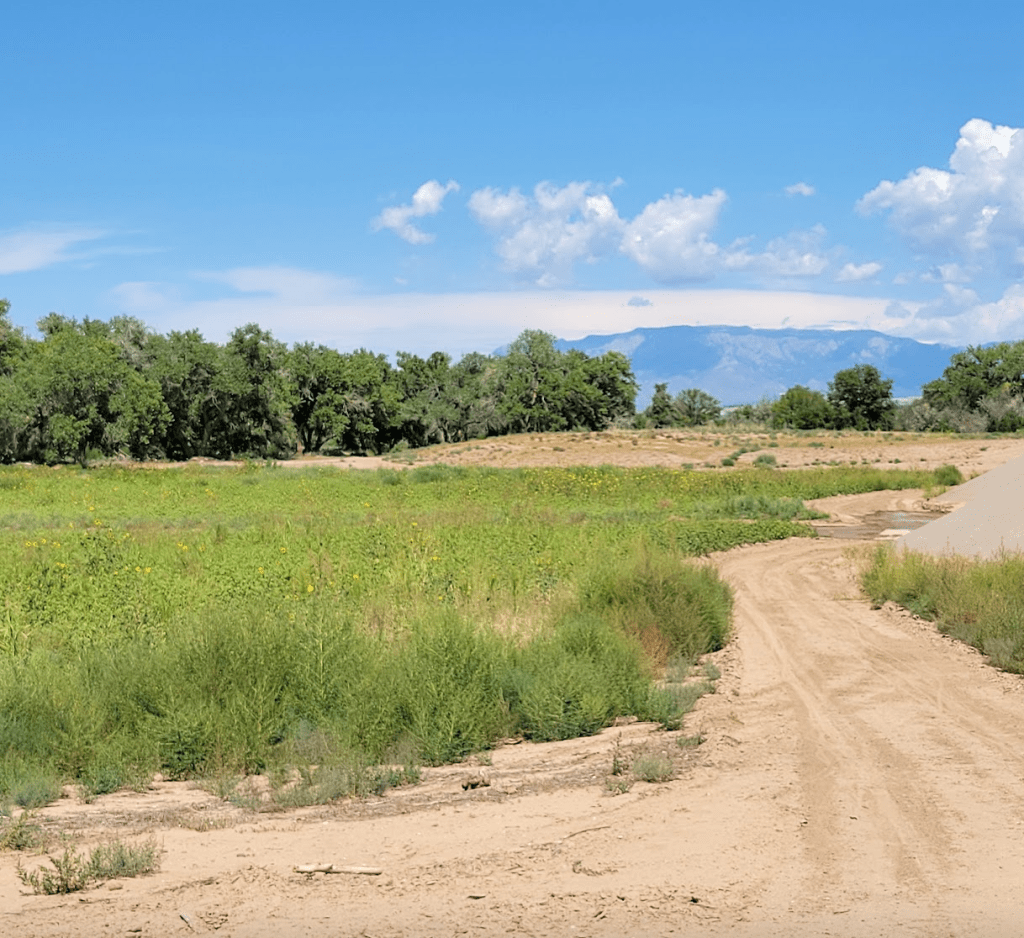
When nearly 100 people gathered at the Albuquerque Rail Trail on a windy Sunday morning, it wasn’t just about $500,000. It was about decades of frustration, years of advocacy, and a long-overdue moment of unity around a shared vision for Albuquerque’s future.
What might have seemed like another municipal funding squabble quickly became something much bigger. The rally wasn’t just a protest—it was a declaration. Albuquerque is ready for change. Our city’s urbanists, cyclists, and community advocates have come together with one clear message: the way we’ve always done things isn’t good enough anymore.
The Flashpoint: A Late-Night Shift with Big Implications
The controversy began when Councilors Louie Sanchez (District 1 – Westside) and Joaquín Baca (District 2 – Downtown) negotiated a late-night budget amendment, diverting $500,000 from the Rail Trail project to a Westside sports complex. While the dollar amount was small in the context of the Rail Trail’s $40 million budget, the timing and symbolism were seismic.
The decision, made after 11 PM and following the tragic death of cycling advocate Chuck Malagodi, felt like a slap in the face to many who have long pushed for safer streets and better urban infrastructure. It wasn’t just about this one project—it was about the city’s long-standing habit of prioritizing car-centric development over walkable, bikeable, community-focused spaces.
A Community Awakens: The Power of Collective Advocacy
The rally that followed wasn’t spontaneous, but it materialized fast. Groups like Strong Towns ABQ and BikeABQ showed up in numbers and mobilized their members quickly, showing the power of Albuquerque’s growing urbanist community. In addition to these two groups, the newly formed Generation Elevate New Mexico (or GENM – a local YIMBY group), are providing a new vision for Albuquerque and for moving forward from exclusive zoning codes and dangerous infrastructure.
And here’s the key: this kind of turnout didn’t happen in a vacuum. These groups have been steadily organizing, educating, and advocating for years. The Rail Trail issue simply became the spark that lit a long-simmering fire.
The mayor’s own words at the rally summed it up: “You kind of woke everybody up.”
For years, public meetings in Albuquerque have often been filled with voices shouting against change—against density, against transit, against anything that disrupts the status quo. But this time was different. This time, people showed up to shout for change. To demand safer streets, better urban form, and a city that plans for people, not just cars.
A Shift in the Political Winds: Why This Moment Matters
Mayor Keller’s outspoken support for the Rail Trail is notable. Throughout his tenure, he’s been relatively measured when weighing in on City Council disputes or large city proposals. But this time was different. This time, there was visible community backing.
Politicians respond to pressure—but they also respond to cover. When the public shows up in numbers, it gives leaders the confidence to stand up for transformative ideas. The Rail Trail rally sent a clear signal: Albuquerque is ready for more than incremental changes. We’re ready for bold, future-oriented development.
This moment also served as a warning to entrenched power structures. The days of quietly shifting funds in late-night council meetings, without public scrutiny, may be numbered. Albuquerque’s residents are watching—and they’re ready to act.
And it’s not just the Rail Trail. The passage of O-24-69, aimed at fostering more inclusive and accessible housing options, further signals a city at a turning point. For years, Albuquerque has struggled with voices resistant to change, often cloaked in NIMBY (Not In My Backyard) rhetoric. But today, that movement seems to be losing its grip. The angry letters, the late-night council moves, the last-ditch efforts to stall progress, the fraudulent appeals—they’re starting to feel less like strategy and more like the gasps of a movement realizing that change is inevitable.
Taken together, these moments mark what may one day be viewed as a big shift for Albuquerque—a move away from car-centric, exclusionary planning and toward a city that prioritizes people, places, and community.
Downtown as a Symbol: Investing in Our Heart
For too long, Downtown Albuquerque has been treated as an afterthought, despite being the city’s most tax-generative area. The Rail Trail isn’t just a pathway for bikes and pedestrians; it’s a statement about what kind of city we want to be—one that values connectivity, public spaces, and economic vibrancy.
Seeing people show up in force to support Downtown was deeply empowering and moving. It was a public endorsement of the idea that a thriving city core benefits everyone.
Looking Forward: A Time for Optimism
There’s still work to be done. The council and the mayor will continue negotiating over the Rail Trail funding, and it remains to be seen how the final deal will shake out. But in many ways, the specific outcome matters less than the bigger picture: Albuquerque’s urbanists have found their voice.
This moment wasn’t just about $500,000. It was about trust, transparency, and a vision for a better city. It was about residents standing up to say, “We’re here. We care. And we’re not going anywhere.”
Albuquerque is changing. The tide is turning. And for the first time in a long time, there’s a sense that we’re moving toward something better.
Let Your Councilor Know You Stand For Safer Streets & Trails
If you care about Albuquerque’s future—if you want safer streets, better infrastructure, and a Downtown that thrives—now is the time to make your voice heard. Reach out to your City Councilor and ask them to:
- Sustain the mayor’s veto on the $500,000 Rail Trail funding cut.
- Consider the mayor’s offer to fund the Westside sports complex through alternative sources.
- Keep promises to Downtown by prioritizing its future as a vibrant, walkable, and economically thriving area.
- Prioritize safer streets for all, including cyclists, pedestrians, and transit users.
Here’s how to contact your councilor:
District 1 – Louie Sanchez
Email: lsanchez@cabq.gov
District 2 – Joaquín Baca
Email: joaquinbaca@cabq.gov
District 3 – Klarissa J. Peña
Email: klarissapena@cabq.gov
District 4 – Brook Bassan
Email: bbassan@cabq.gov
District 5 – Dan Lewis
Email: danlewis@cabq.gov
District 6 – Nichole Rogers
Email: nrogers@cabq.gov
District 7 – Tammy Fiebelkorn
Email: tammyfiebelkorn@cabq.gov
District 8 – Dan Champine
Email: dchampine@cabq.gov
District 9 – Renée Grout
Email: rgrout@cabq.gov
Update – March 2025
Since publishing this post, the funding for the Rail Trail took an unnecessary detour through City Council politics. After the Mayor vetoed the funding transfer, the Council overrode the veto—not as a principled decision, but seemingly as a petty jab at the administration. However, due to significant public backlash, the Council ultimately restored the funding to the Rail Trail through another mechanism.
Notably, Council President Brook Bassan expressed outrage at the Mayor’s veto, calling it inappropriate—despite the fact that the public, not the Mayor, had called for it. Downtown’s Councilor not Baca dismissed the controversy as “blown out of proportion,” disregarding the fact that it was residents, not the Mayor, who were upset by the Council’s actions. This ordeal should serve as a reminder that our elected officials work for the people, and in this case, the people were angry at them, not at the administration.
That said, we are relieved that the funding was ultimately restored to its rightful place. Throughout this entire episode, one voice stood out as a steady advocate for reason and good governance—Councilor Tammy Fiebelkorn (District 7 – Uptown area), who remained a calm, logical presence on this issue amid the political chaos.
This situation is a testament to the power of public engagement. When residents speak up, they can make a difference. Let’s make sure City Council keeps that in mind moving forward.
 Reimagining Albuquerque
Leave a comment