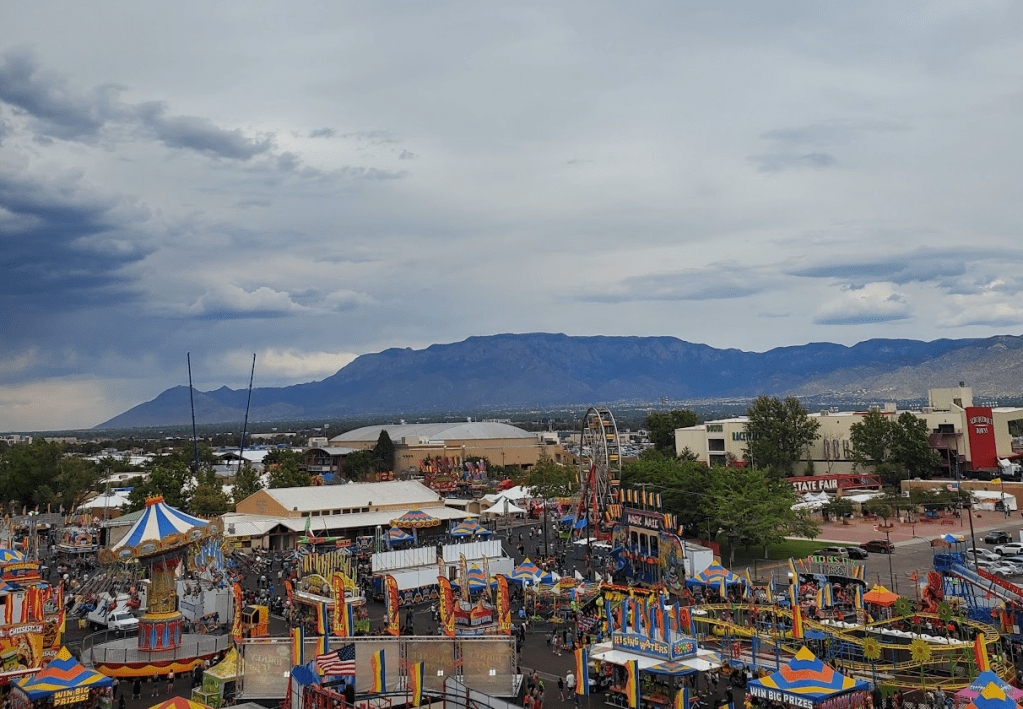
The New Mexico State Fairgrounds sit at a crossroads—both literally and figuratively. With the state considering a major redevelopment of the site, the fairgrounds could become a thriving, mixed-income, transit-oriented neighborhood that would bring jobs, housing, and investment to a long-neglected area.
Or, we could let out-of-touch leadership continue to frame the International District as a “drag on the city” instead of recognizing the opportunity to strengthen it.
At a recent Fairgrounds Public Meeting, Former Mayor Marty Chavez—handpicked by Governor Michelle Lujan Grisham to oversee this process—made it abundantly clear that he is not the leader this project needs.
Rather than facilitating visionary discussions, Chavez dismissed urbanist ideas, ignored transit possibilities, and blamed pedestrian fatalities on victims rather than the hostile road design. He derided the entire district, failing to acknowledge that decades of policy failure—including his own three terms as mayor—helped create the conditions the neighborhood struggles with today.
A Vision for the Fairgrounds: What Could Be
Imagine the fairgrounds transformed into a vibrant, walkable, mixed-income district:
- Transit-Oriented Development: The site sits directly on Albuquerque Rapid Transit (ART), making it ideal for car-free living and walkable communities—a model that has worked in cities like Tempe, AZ (Culdesac) and should work here.
- Affordable and Mixed-Income Housing: With the right planning, the fairgrounds could integrate housing options for people of all incomes, preventing displacement while bringing new energy to the International District.
- Public Spaces and Green Infrastructure: The historic Pueblo Revival structures along the fairground’s “Main Street” could anchor a new civic plaza, surrounded by parks, small businesses, and community spaces.
A Smart Growth Strategy That Strengthens the City
Rather than a developer-led megaproject, this redevelopment should be designed to support and enhance surrounding areas—especially the San Pedro corridor, which is already working to re-establish itself as a thriving commercial and cultural district.
- Boosting San Pedro’s Revival: The west edge of the Fairgrounds sits along San Pedro Drive, where businesses are slowly trying to make a comeback. This project could reinforce that momentum by adding mixed-use development—placing new residents near shops, services, and transit, creating the foot traffic needed to sustain local businesses.
- Breaking the Fairgrounds Barrier for Cyclists and Pedestrians: Right now, the Fairgrounds act as a massive dead zone for connectivity, cutting off bike boulevards on either side. To the west, Copper and Marquette provide safe cycling routes—but they dead-end at the Fairgrounds. On the east side, Chico could serve the same purpose, but there is no direct connection. Redeveloping this site is a chance to finally fix this, making safe, direct routes for cyclists and pedestrians through the site and tying into ART and other transit connections.
- Delivering Thousands of Much-Needed Homes: Albuquerque is tens of thousands of units short of what we need to stabilize housing costs. A well-planned redevelopment here could singlehandedly deliver thousands of homes—helping meet demand, creating affordability, and reducing the kind of economic desperation that fuels crime. Marty Chavez may think the only solution is more policing and incarceration, but the real solution is building housing and economic opportunity in the areas that need it most.
If we get this right, the Fairgrounds project won’t just fill a hole in the middle of the city—it will bridge neighborhoods, support local businesses, and help solve the very problems that Albuquerque’s outdated policies have allowed to fester.
The Real Drag on Albuquerque
Chavez painted the International District as a liability, but let’s be clear: the true drag on Albuquerque isn’t the International District—it’s the endless suburban sprawl that he helped push as mayor.
For decades, Albuquerque has expanded outward, funneling resources away from its historic core into car-dependent, financially unsustainable developments. The result? A city where:
- Infrastructure liabilities are skyrocketing while neighborhoods inside the city struggle to get basic services.
- We can’t afford to maintain what we already have—yet we continue subsidizing new suburban growth.
- The most dangerous urban stretch of road in the U.S. (Central Ave in the International District) continues to kill pedestrians, while leadership blames the victims instead of fixing the underlying design failures.
It’s time to reject the old way of thinking that got us here. The Fairgrounds project must be led by people with vision—not by someone who actively derides the neighborhood he was entrusted to represent.
What Happens Next?
The state will continue exploring options for the Fairgrounds site, and it’s up to us to ensure that the conversation isn’t hijacked by the same outdated thinking that has kept Albuquerque from realizing its full potential.
This project could be one of the most transformative in Albuquerque’s history—but only if we demand that smart, community-driven, transit-friendly development is at the center of the plan.
What You Can Do:
- Push for a Fairgrounds Plan That Prioritizes Transit-Oriented, Walkable Development
- Call Out Leadership That Stifles Vision and Innovation
- Engage in Public Meetings to Demand a Plan That Serves the International District and the Entire City
The fairgrounds could set a new standard for how Albuquerque grows in the 21st century—or it could become yet another wasted opportunity.
The choice is ours.
 Reimagining Albuquerque
Leave a comment